
Bonds Across the Mekong and Chao Phraya: The Journey of "Chinese Food" in the Rattanakosin Era — From Humble Beginnings to a Thai Favourite

อัปเดตเมื่อ 19 ส.ค.
By Tripradap W.
Among the many foreign influences that have woven themselves into the fabric of Thai cuisine during the Rattanakosin period, it is undeniable that Chinese food culture stands as the most profound and far-reaching. One could even say that more than half of what Thais eat in their daily lives today carries the DNA of Chinese culinary tradition.
This journey of flavour did not happen overnight. It evolved gradually across generations and eras, until it became so deeply embedded in Thai cuisine that the two are now virtually inseparable.
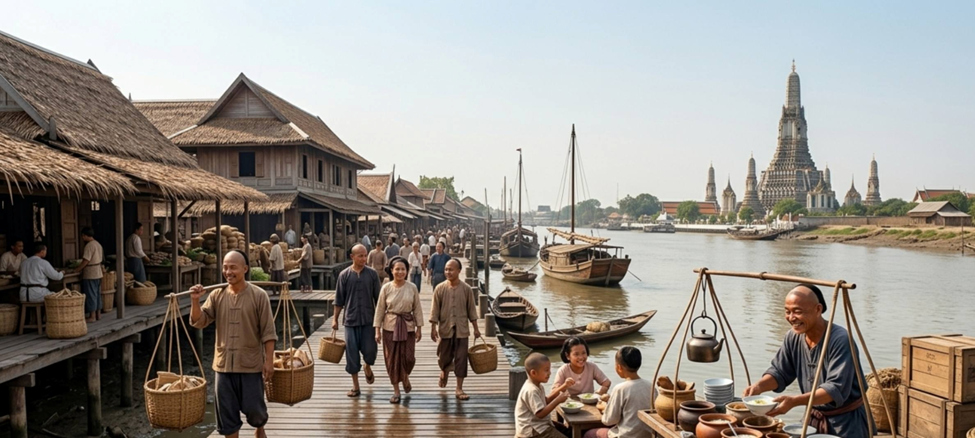
The Early Rattanakosin Era: The City's First Days and the Laying of Roots
When Bangkok was established as the capital in 1782, the area at the heart of the city — where the Grand Palace stands today — was originally home to a sizeable Chinese community, before they resettled outside the city walls in the neighbourhoods of Sampeng and Yaowarat.
In this early period, Chinese immigrants brought with them both the ingredients and the culinary philosophy of the Chinese kitchen. Most notably, they introduced soy sauce, fermented soybean paste (tao jiao), tofu, and pork-based products — ingredients that were largely unfamiliar to native Thais, who at the time centred their diet around fish and freshwater seafood.
The Chinese community in Sampeng gradually became the primary producer of these staple ingredients, and over time, these new condiments found their way into the royal kitchens and the households of Thai nobility.
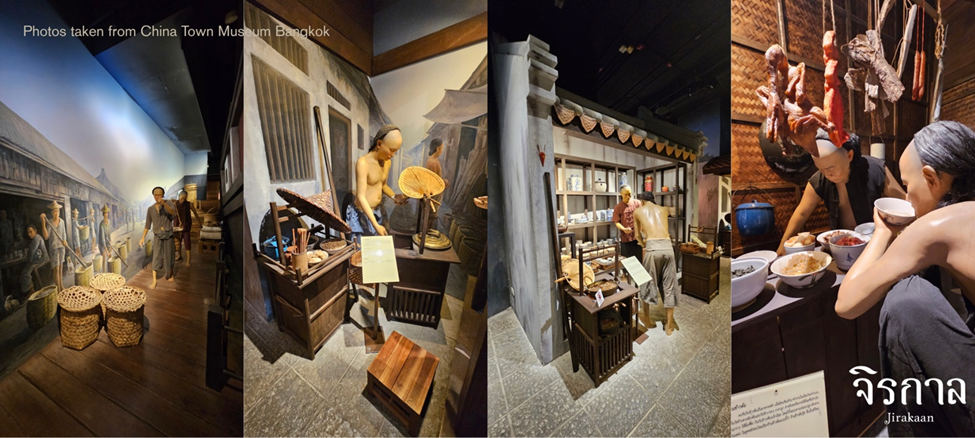
The Golden Age of Fusion: The Era When Chinese Food Flourished and Transformed Thai Eating Habits Most Profoundly
If there is one period that stands out as the defining moment when Chinese cuisine took root most deeply in Thai food culture, it is the mid-to-late 19th century — particularly during the reign of King Chulalongkorn (Rama V).
This era marked a pivotal turning point that dissolved the boundaries between "Thai food" and "Chinese food," driven by three key factors:
1. The Arrival of "High Heat" Cooking and the Iron Wok
Before this period, Thai kitchens were accustomed to boiling, currying, grilling, and clay pot cooking. Chinese immigrants introduced the charcoal stove and the round-bottomed iron wok, capable of withstanding intense heat. This gave birth to the techniques of stir-frying and deep-frying in Thai society. Dishes like stir-fried vegetables with chilli (pad pak fai daeng), basil stir-fry (pad krapao), and various fried foods that Thais enjoy today all trace their origins back to this Chinese innovation.
2. The Era of "Khao Tom Kui" and Street Food Culture
As Bangkok expanded with the digging of canals and the construction of its earliest roads — such as Charoen Krung Road — Chinese labourers and vendors began setting up roadside food
stalls. Easy, affordable dishes like rice porridge (khao tom) served with stir-fried morning glory in fermented bean paste, salted eggs, or Chinese sausage, along with noodle soups of every variety, became the fast food of urban life. Even the royal court was not untouched, as Chinese food from Sampeng began to be ordered for palace banquets, and Chinese cooks were appointed to serve in the royal kitchens.
3. The Birth of "Thai-Chinese" Dishes That Don't Exist in China
Perhaps the most remarkable outcome of this era was the creativity of Thai cooks, who took Chinese ingredients and techniques and amplified them with bold Thai flavours — giving rise to hybrid dishes that became uniquely Rattanakosin in character:
Kaeng Jued (clear soup): Adapted from Chinese clear broth, but elevated with the Thai holy trinity of coriander root, garlic, and white pepper.
Red Pork and Crispy Pork Rice (Khao Moo Daeng Moo Krob): Rooted in Cantonese roasted pork, reimagined with a sweet-savoury sauce developed by Thai cooks.
Pad Thai: Evolved from Chinese noodle-making traditions and stir-fry techniques, but distinctly Thai in flavour thanks to tamarind paste, dried chilli flakes, and fish sauce.

Chinese Food in Rattanakosin: A Heritage Fully Absorbed into the Thai Kitchen
From its origins as the food of an ethnic community in Sampeng, Chinese food culture has journeyed through nearly 250 years of history, serving as a catalyst that made Thai cuisine more flexible, diverse, and layered than it could ever have been alone.
Today, every time you order a bowl of noodles, every time you hear the clang of a spatula against a blazing iron wok, or every time you drizzle soy sauce over a fried egg — that is the
clearest proof that the Chinese culinary culture of the Rattanakosin era has never truly left. It has simply become one and the same with the everyday life and very breath of the Thai people.
Reserve your table and experience the flavours of Rattanakosin at: https://aroi-restaurants.com/restaurants/-jirakaan-restaurant-bangkok/


