An Offering of Love and Taste: "Khun Phae" or "Chao Chom Manda Phae" or "Chaokhun Phra Prayurawong" and the Coastal Flavors of the Eastern Shore

อัปเดตเมื่อ 19 ส.ค.
By Tripradap W.
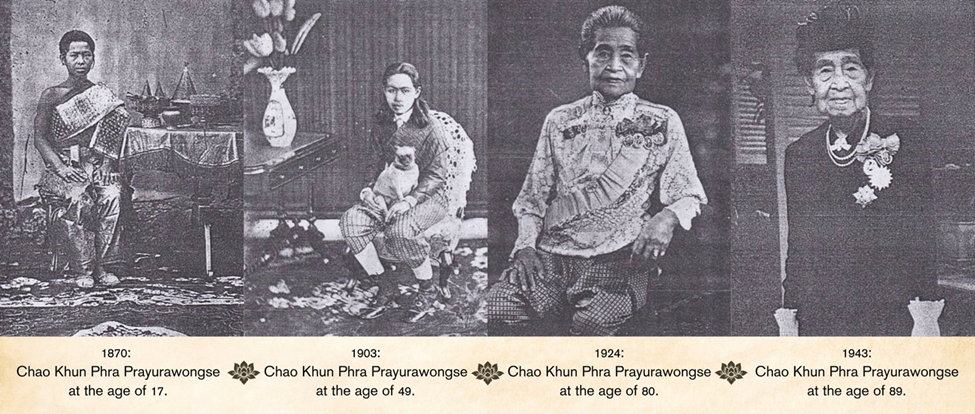
In the year 1876, after His Majesty King Chulalongkorn (Rama V) embarked on a royal waterborne procession to visit the eastern provinces, with the primary objective of conducting an official inspection in Chanthaburi, the journey, though work-oriented and intended for gathering information to develop the country, was not one of solemn duty for the King. Instead, it became a period of delight and royal relaxation amidst abundant nature. Along with numerous princes who accompanied Him to later carry out their duties, the King was also accompanied by the woman who was His "first love" and a favored consort close to His heart, "Khun Phae," who followed to closely attend to His meals. Khun Phae's role was akin to that of an artist transforming the ingredients acquired along the way—whether fresh offerings from local villagers or seafood and game caught by the princes and royal entourage—into exquisite delicacies with meticulous care.
In his royal writings, "The Journey to Chanthaburi and a Geographical Glossary of Chanthaburi Province," the King recorded that while traveling to inspect the eastern seaboard and various islands before heading to Chanthaburi, when the royal vessel anchored at Sattahip, He was deeply impressed by the skill behind the dish "Jian Pla Chom Ngam" (Fried Sleek Unicornfish). A large, freshly caught sleek unicornfish was prepared by Khun Phae using the 'jian' (a frying/braising method) technique until it was fragrant and its flavor perfectly balanced, pleasing the King's palate so greatly that King Chulalongkorn composed a verse praising her skill.
This verse not only praised the taste of the food but also concealed affection for its preparer within the poetry, serving as a testament to the love and closeness shared in that moment.

From Sattahip, the royal procession sailed to anchor at Chong Samet, and then moved via smaller boats skirting the coastline in search of a village producing shrimp paste. The King disembarked and walked along the shore, finding a shrimp paste shack with a person sitting in front whose appearance was unusual. The King inquired, guessing if it was leprosy. The shack owner confirmed it was. Startled, as He had never seen it before, the King hurriedly departed. Shortly after, He found two shrimp paste production shacks side by side, inquired about the shrimp paste and the locals' livelihood for a while, and then returned to the ship.
His Royal Highness Prince Chitcharoen, the Prince Patriarch (Krom Phra Jaktraphong Phong), whom King Rama V referred to as "Than Klang" (the Middle One), brought food ingredients. These included a swiftlet, turtle eggs, and sea cucumbers. Than Klang explained that his servant, who collected the egg tax in this area, had given them to him, saying this bird resembled the bird that makes nests from saliva (edible-nest swiftlet), but these birds did not build nests, merely inhabiting the islands. It was said they were very delicious to eat. His servant had previously sent these birds alive to Bangkok, but they did not survive the journey, dying en route. So, Than Klang promised his servant he would try them today. Khun Phae then prepared the swiftlet into a "swiftlet curry" for them to eat. It was indeed delicious as Than Klang had said; the flavor was somewhat similar to spotted dove. Khun Phae also made sausages as usual, but fried them, making them much more delicious than normal. That day, the King partook of the royal meal more heartily than any other day.
Khun Phae's culinary work during this journey was not merely about cooking to satisfy hunger. It was about managing local resources and transforming them into royal cuisine of the highest order. King Chulalongkorn praised Khun Phae, recording: “It is true that Khun Phae is a woman, yet she is stronger than men. Wherever we went, she always managed to have food ready at every place without fail. When traveling by boat, she steered the helm herself; when on land, she walked to the very end of the beach, two or three times over, without ever retreating. Having someone like this as our cook is truly excellent. If someone else did it, I am certain we would have faced difficulties—not at all like Khun Phae's work. Even on the boat, she would lie beside the stove until late evening. Yet, having worked like this for five or six years now, she has never once complained of fatigue or shirked her duties out of laziness. Everyone aboard the royal vessel adores Khun Phae entirely. Whenever one wishes to eat, it is ready at that very moment—she knows no airs at all.”
Khun Phae's culinary work during this journey was not merely about cooking to satisfy hunger. It was about managing local resources and transforming them into royal cuisine of the highest order. King Chulalongkorn praised Khun Phae, recording: “It is true that Khun Phae is a woman, yet she is stronger than men. Wherever we went, she always managed to have food ready at every place without fail. When traveling by boat, she steered the helm herself; when on land, she walked to the very end of the beach, two or three times over, without ever retreating. Having someone like this as our cook is truly excellent. If someone else did it, I am certain we would have faced difficulties—not at all like Khun Phae's work. Even on the boat, she would lie beside the stove until late evening. Yet, having worked like this for five or six years now, she has never once complained of fatigue or shirked her duties out of laziness. Everyone aboard the royal vessel adores Khun Phae entirely. Whenever one wishes to eat, it is ready at that very moment—she knows no airs at all.”


