Unlocking the Mystery of "Pad Thai": The Global Icon Born from Street Smartness, Not a Dictator’s Pen

By Tripradap
If you ask anyone around the globe to name one dish that defines Thai cuisine, Pad Thai is almost always the answer. It is a masterpiece of textures and flavors: chewy rice noodles coated in a glossy, tangy tamarind sauce, balancing sweet, savory, sour, and a gentle kiss of chili.
For decades, both locals and travelers have been told a beautifully romantic story: “Pad Thai was personally invented in the 1940s by Thailand’s nationalistic Prime Minister, Field Marshal Plaek Phibunsongkhram (affectionately known as Marshal P.), as a psychological tool to build a unified national identity during World War II.”
It’s a masterclass in storytelling. But if you put on your food-detective hat and dig into historical archives, you discover a twist that is far more fascinating.
Did this global culinary superstar actually come from the grand vision of a military dictator? Or was it born from the sheer, unadulterated genius of Thai street vendors? Let's untangle the noodles of history.

The "Official" Legend: Noodles as a Weapon of Nation-Building
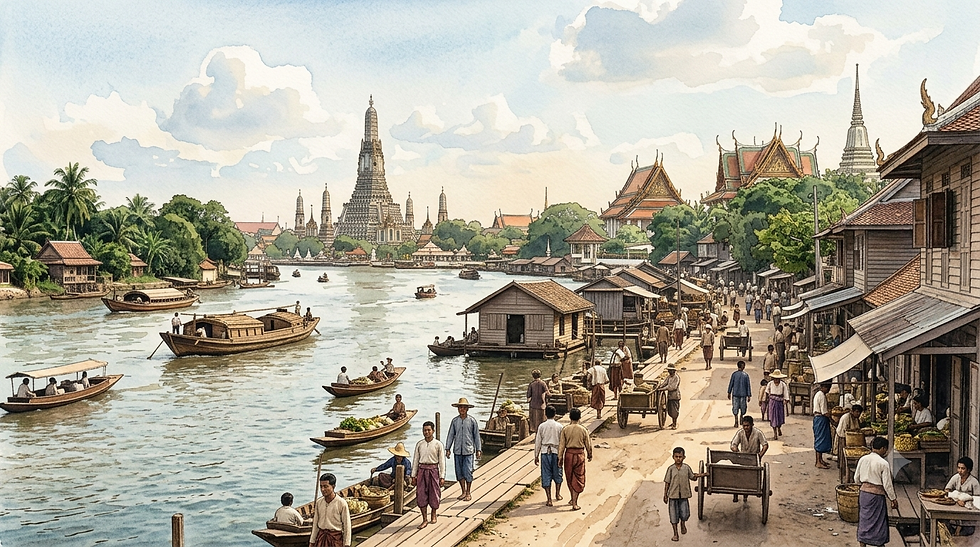
To understand the myth, we have to travel back to Bangkok between 1938 and 1944. World War II was raging, and Thailand was hit by massive floods. Rice—the staple of the nation—was scarce and incredibly expensive.
To tackle the economic crisis, Prime Minister Phibunsongkhram launched a series of cultural decrees called Cultural Mandates to modernize the country and spark a fierce sense of patriotism.
The mainstream historical narrative claims the Prime Minister noticed that Thais ate too much rice and too many Chinese-style noodle soups. So, he allegedly ordered a brand-new dish to be engineered. He banned pork (deemed too Chinese at the time) and replaced it with local ingredients like dried shrimp, tofu, bean sprouts, and garlic chives. He flavored it with traditional Thai tamarind juice and palm sugar, naming it “Kway Teow Pad Thai” (Thai-style stir-fried noodles). The government even distributed food carts and recipes across the country to enforce this new national dish.
It sounds like a perfect, neat history lesson. But history is rarely that tidy.
The Plot Twist: The Missing Recipe and a Daughter's Confession
When modern food historians decided to dig up the actual primary sources—specifically the Srikrung Newspaper from November 1942, the height of the government’s noodle campaign—they found something shocking.
To help people make a living during the war, the government did print an official list of approved noodle recipes for the public to cook and sell. There were exactly eight official recipes listed, ranging from noodle soups to stir-fried noodles with crab.
The shocker? The name "Pad Thai" did not appear anywhere on that list.
So, what was on the list? The eighth recipe was a dish called “Kway Teow Pad Kathee” (Stir-Fried Noodles with Coconut Milk).
The 1942 Government Recipe: While it used similar base ingredients like rice noodles, yellow tofu, crushed peanuts, bean sprouts, and chives, there was a massive difference. The dictator’s official recipe explicitly ordered vendors to stir-fry the noodles in rich, simmered coconut milk, and it made absolutely no mention of tamarind paste. It tasted more like a rich, creamy, heavy coconut noodle dish—not the tangy, refreshing Pad Thai we know today.
Even more telling is a later interview with Jeerawasa Phibunsongkhram, the daughter of the Prime Minister himself. When asked about her father's culinary legacy, she admitted that the family was quite baffled by the rumor. She noted that her father never actually spoke about the word "Pad Thai," and growing up, their household only ate ordinary, everyday stir-fried noodles.
The Real Heroes: The Creative Genius of Thai Street Vendors
If the dictator didn’t invent the Pad Thai we love today, who did?
Historians now believe that Prime Minister Phibunsongkhram did something equally important: he built the infrastructure. He normalized eating noodles, provided the street carts, and made stir-frying a national trend. But the true culinary alchemy happened on the streets, executed by everyday Thai vendors.
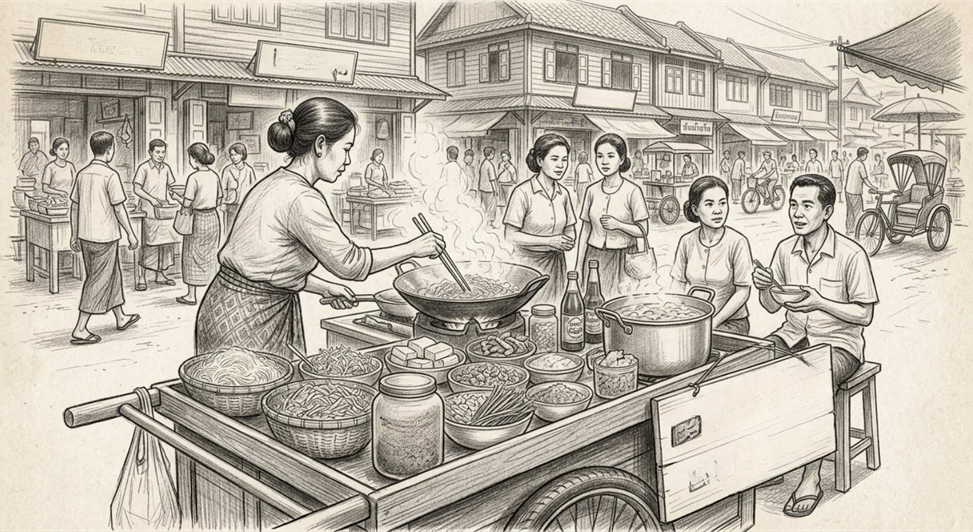
Imagine being a street food vendor after the war. Coconut milk was expensive, and in the scorching Bangkok heat, it spoiled quickly on a food cart. Seeking efficiency, clever Thai home cooks and street vendors stripped the heavy coconut milk out of the recipe and replaced it with standard cooking oil.
But without coconut milk, the dish lost its soul. To fix the flavor profile, these vendors looked back into the DNA of ancient Thai cooking. They bypassed Chinese soy sauces and instead melted down a classic Thai flavor trifecta: tamarind paste, palm sugar, and fish sauce (the same foundational balance used in traditional Thai dips and dressings).
When these three ingredients hit the hot wok, they caramelized, coating the noodles in a perfect harmony of sour, sweet, and savory. It was radically different from any Chinese stir-fry. Because it tasted so undeniably, uniquely Thai, the public naturally began calling it "Pad Thai."
It wasn't created by a government decree; it was created by the people, for the people.
From a Humble Cart to Global Soft Power
Whether its journey started from a politician's typewriter or a street vendor’s wok, Pad Thai remains a stroke of cultural genius.
For the world, it serves as the ultimate gateway to Thai cuisine. It’s approachable, completely customizable, and balances complex textures—the chew of the noodle, the crunch of the peanut, and the freshness of the raw bean sprouts.
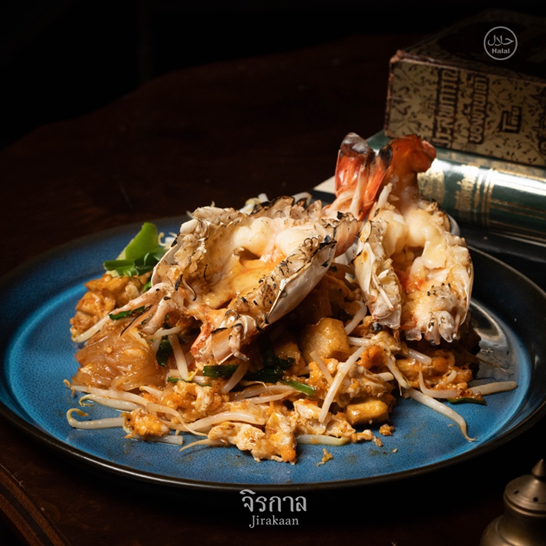
The next time you take a bite of Pad Thai, remember that you aren't just eating a quick street food meal. You are tasting decades of human adaptability, a dish that evolved from a forced wartime ration into a beautiful expression of Thai culinary creativity.
Enjoy your noodles, and remember: Pad Thai truly did help build a nation, but it was the street vendors who held the spatula!
"If you want to try Pad Thai from its earliest era, made with only traditional ingredients, thousands of customers confirm it's the best Pad Thai. Come eat at Jirakaan restaurant!"


