
Unveiling the Legend of "Bat Snack" – From an Ayutthayan Royal Kitchen Delicacy to the "Taro Bat" of the Rattanakosin Era

อัปเดตเมื่อ 21 ส.ค.
By Tripradap W.
When speaking of famous ancient Thai snacks with a history spanning over 250 years, the name "Khanom Khang Khao" (Bat Snack) is among the most frequently mentioned. Particularly in the circles of traditional royal court cuisine, people are familiar with the saying: "The Bat Snack of Chao Khrok Thong Yu, the stuffed-pastry of Chao Khrok Wat Pho" – a testament to the renown of these two snacks in times past.
Origins in the Late Ayutthaya Period
The origin of the Bat Snack is deeply intertwined with a turbulent period of Thai history. "Chao Khrok Thong Yu" – later known as "Chao Khrok Wang Lang" (a consort of Prince Sura Singhanat, the Viceroy, during King Rama I's reign) – originally served as a lady-in-waiting to Princess Chanthawadi, daughter of King Borommakot of Ayutthaya.
After the second fall of Ayutthaya in 1767, Chao Khrok Thong Yu followed her princess into captivity at the Photi Sam Ton camp. When King Taksin the Great liberated the camp during his reunification of Siam, they relocated to Thonburi. Later, in the Rattanakosin period, she was celebrated as a noble lady with supreme skill in preparing both savoury and sweet dishes.
Chao Khrok Thong Yu's original recipe: The outer dough was made from kanom jiab (dumpling) flour. The filling consisted of prawns (the kung nang variety), coconut, husked split mung beans, kaffir lime leaves, lard, salt, and pepper. The mixture was wrapped into a rounded triangular shape resembling a folded bat's wing, then deep-fried until crispy.
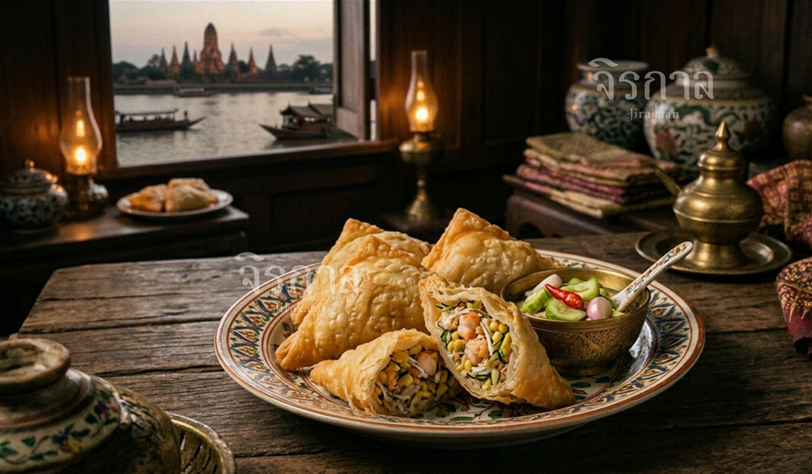
The Evolution of Flavour Across Three Eras
Over its long history, the Bat Snack has seen its recipe adjusted according to taste and era, giving rise to three important variations:
Original recipe (Ayutthaya – early Rattanakosin): Chao Khrok Thong Yu's formula emphasised the richness of prawns and coconut, with a well‑balanced savoury flavour, fragrant with pepper and kaffir lime.
Recipe of Somdet Phra Phanwassa (mid‑Rattanakosin): The recipe was improved by adding khao mao (young roasted rice paddy), lending a distinctive texture and aroma.
Recipe of Thanphuying Plian Phasakornwong (late King Rama V's reign): This was a major turning point that created the "Taro Bat" (Khang Khao Peuak). Thanphuying Plian (author of the classic cookbook Maekhrua Hua Pa) introduced mashed steamed taro into the outer dough. This made the pastry soft, fluffy and fragrant with taro, and when fried gave a perfectly crisp‑outside, tender‑inside texture – the recipe that has been passed down to today.
The Bat Snack Today
Today, "Taro Bat" is a rare and hard‑to‑find ancient Thai snack, due to its meticulous preparation: stir‑frying the filling until dry, steaming and mashing taro through a fine sieve for a smooth dough, and carefully pleating the triangular wrappers before frying.
Besides the original savoury shrimp filling, a vegetarian version now exists for non‑meat eaters, using taro, jicama (yam bean), and shiitake mushrooms stir‑fried with the "Three Friends" (coriander root, garlic, pepper). This version is equally rich, satisfying, and shows the culinary wisdom that creates perfectly balanced flavours.
Jirakaan Restaurant's Taro Bat
To revive this rare, centuries‑old snack and keep it from disappearing, Jirakaan Restaurant has brought back the "Taro Bat" to grace its dining table. Weaving together over 250 years of history, the restaurant presents it on the plate with refined artistry, while adjusting the recipe and ingredients to suit modern tastes. Their vegetarian version – taro, jicama, and shiitake mushrooms stir‑fried with the Three Friends – delivers a rich, savoury, and well‑rounded flavour. It is served with authentic "coconut milk achad" (sweet pickled relish) as per the ancient recipe, so that every bite not only satisfies hunger but also lets you taste a living piece of royal court history.
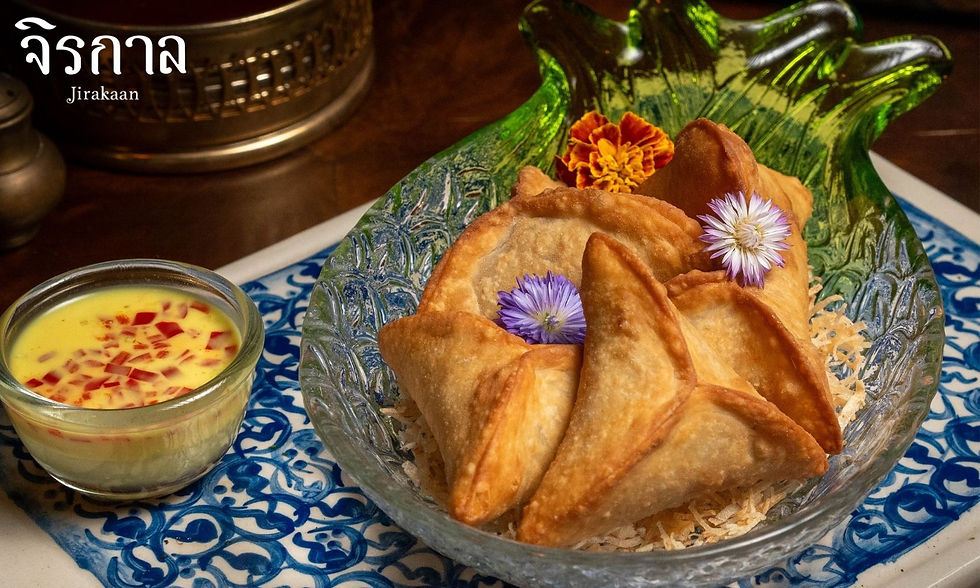
Ancient Accompaniment: Coconut Milk Achad
The delicacy at Jirakaan doesn't stop with the snack itself; it extends to the dipping condiment that cuts the richness of fried food. Traditionally, Bat Snack was enjoyed with "coconut milk achad" – a signature recipe of Princess Sai Savali Phirom, who oversaw the Royal Kitchen during King Rama V's reign. Unlike ordinary clear‑liquid achad, this version simmers coconut milk until thick, then mixes it with vinegar, lime juice, sugar, and salt, plus cucumber, chili, and shallots. It lifts the Taro Bat, giving it a mellow, rounded flavour.
Come turn back time and experience the exquisite taste of royal court cuisine – today at Jirakaan Restaurant. Reserve in advance for this unique experience. Savour "Taro Bat", a rare ancient snack lovingly revived and delicately presented on your plate. Let every bite introduce you to Thai history that still breathes… because a delicious story from the past is waiting for you to discover.


